
Buying a château in France: a building expert on your side, from survey to renovation
You have found a château, a manor or a stone house in Saint-Émilion, elsewhere in Gironde or in the Dordogne, and you live in the UK, the Netherlands, Belgium, Ireland or the US. I am a French building expert with 15 years' experience. I check the building before you sign, I support you through the renovation and I keep an eye on the site while you are abroad. Reports are written in French and delivered in English.
- 15 yearsin the building trade
- 300+assignments completed
- 5.0 / 526 Google reviews (in French)
- OFIBqualified building expert
Three stages, one point of contact
Take the whole journey, or just the stage you need.
Before you buy
Know what you are buying.
- Site visit with a building expert
- Structure, roof timbers, roofing
- Risks and likely works
Renovating
Someone on your side during the works.
- Scope and order of works
- Quotes compared, insurance checked
- Choosing who does what
Remote oversight
Your site followed while you are away.
- Visits at key stages
- Reports with photos
- Decisions confirmed in writing

Who I am
I'm David Bertrand, a building expert qualified at OFIB, the French school for building experts. Before that I spent years on site, in timber frame construction, structural masonry, waterproofing and roofing.
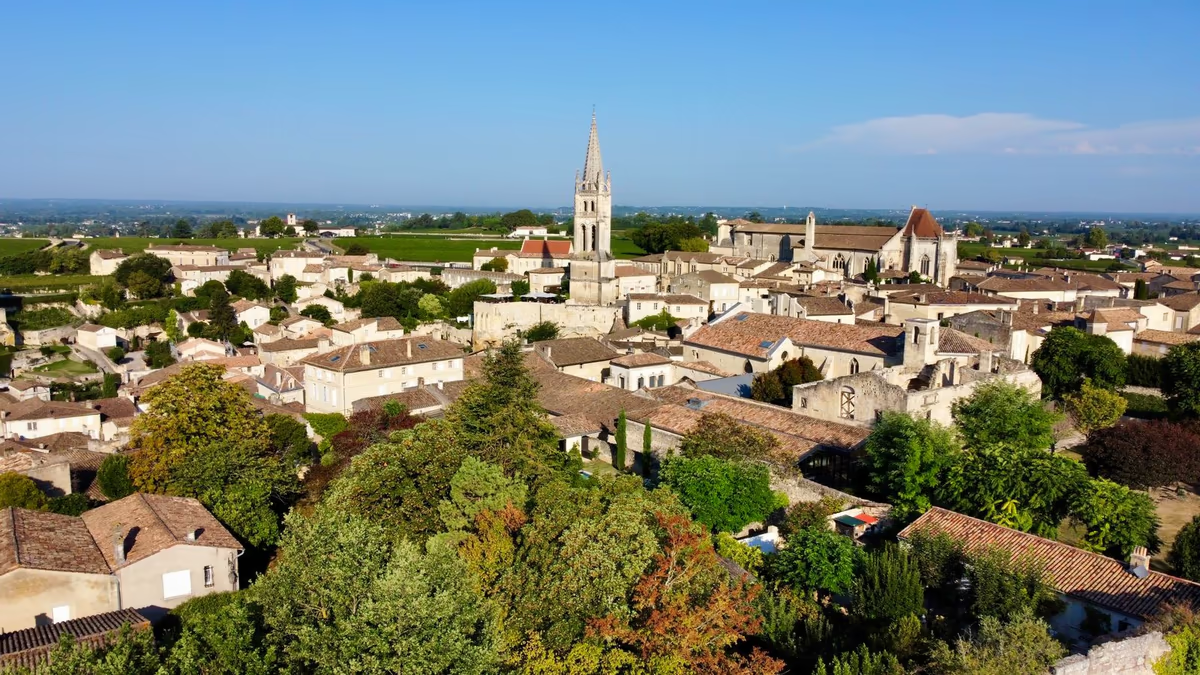
My practice, Home Expertise, is based at Les Billaux, next to Libourne and a short drive from Saint-Émilion. I know the old buildings of this area and of the Dordogne: limestone walls, historic roof timbers, clay soils.
- I never carry out the works I recommend, so my advice does not depend on what there would be to invoice afterwards.
- Thermal imaging, drone, borescope: the tools are chosen for what needs checking.
- Professional liability insurance with AXA, certificate available on request.

Member of BNI Saint-Émilion Signature, a local business network
Before you buy: what a building expert checks
The diagnostics the seller provides are compulsory checks (asbestos, lead, energy and so on). They tell you little about the condition of the building itself. A pre-purchase survey does.
- Structure Load-bearing walls, floors, visible foundations: what holds the house up.
- Roof timbers Condition of the timber frame, sagging, signs of insects or rot.
- Roofing Tiles or slates, leadwork and zinc, gutters and downpipes.
- Damp Rising damp, water ingress, ventilation.
- Cracks Where they come from, how serious they are, what they point to.
- Old buildings Stone, lime, renders: what suits an old building and what harms it.
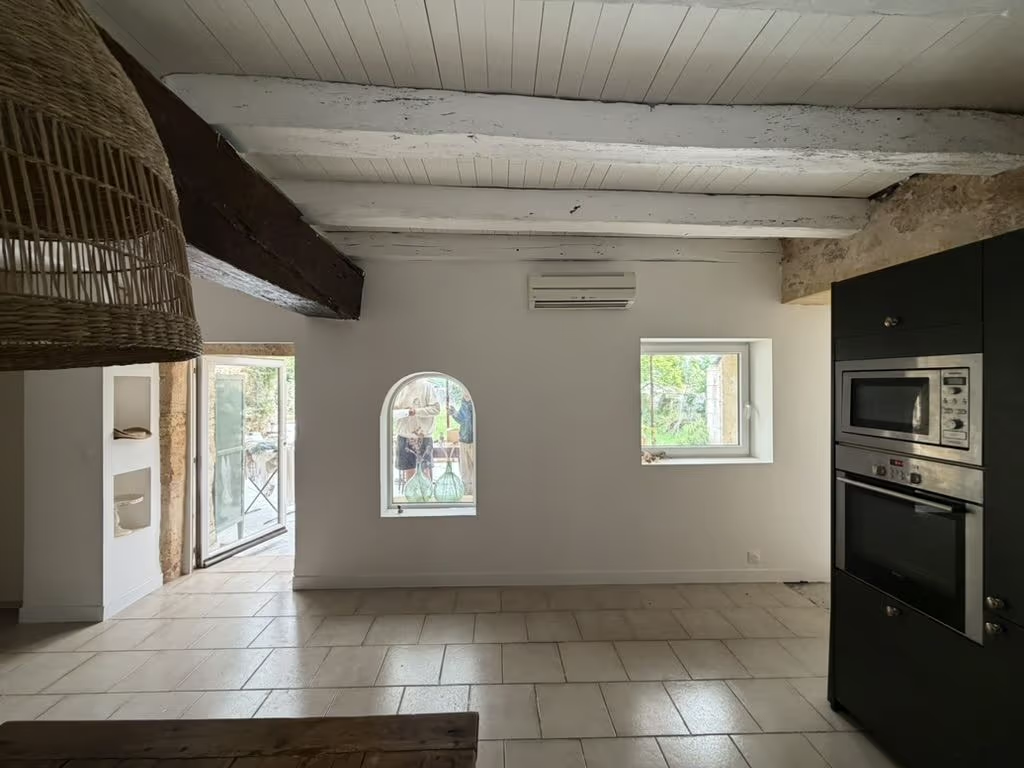
What I find on site
Photos from my own surveys: these are the findings a report is built on.
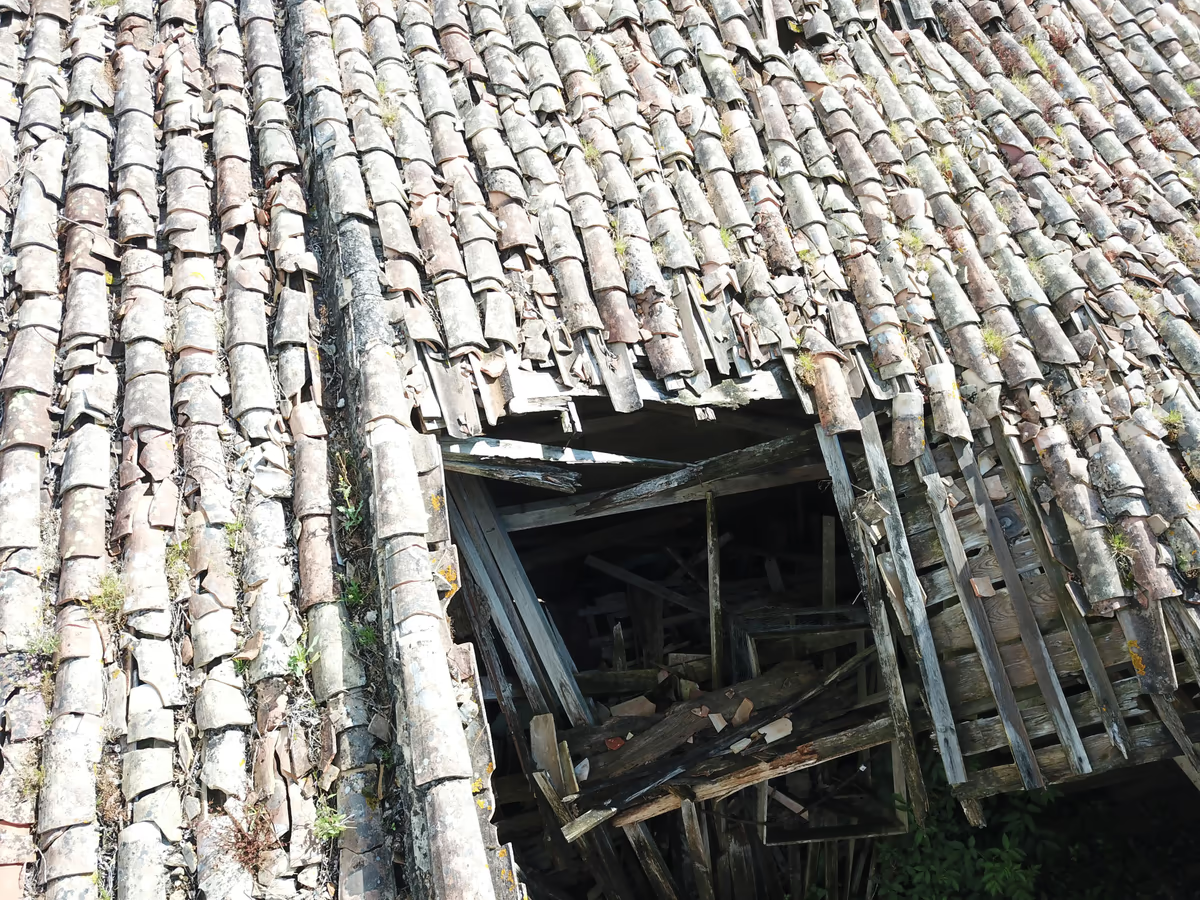
A collapsed roof: the timbers are getting wet. 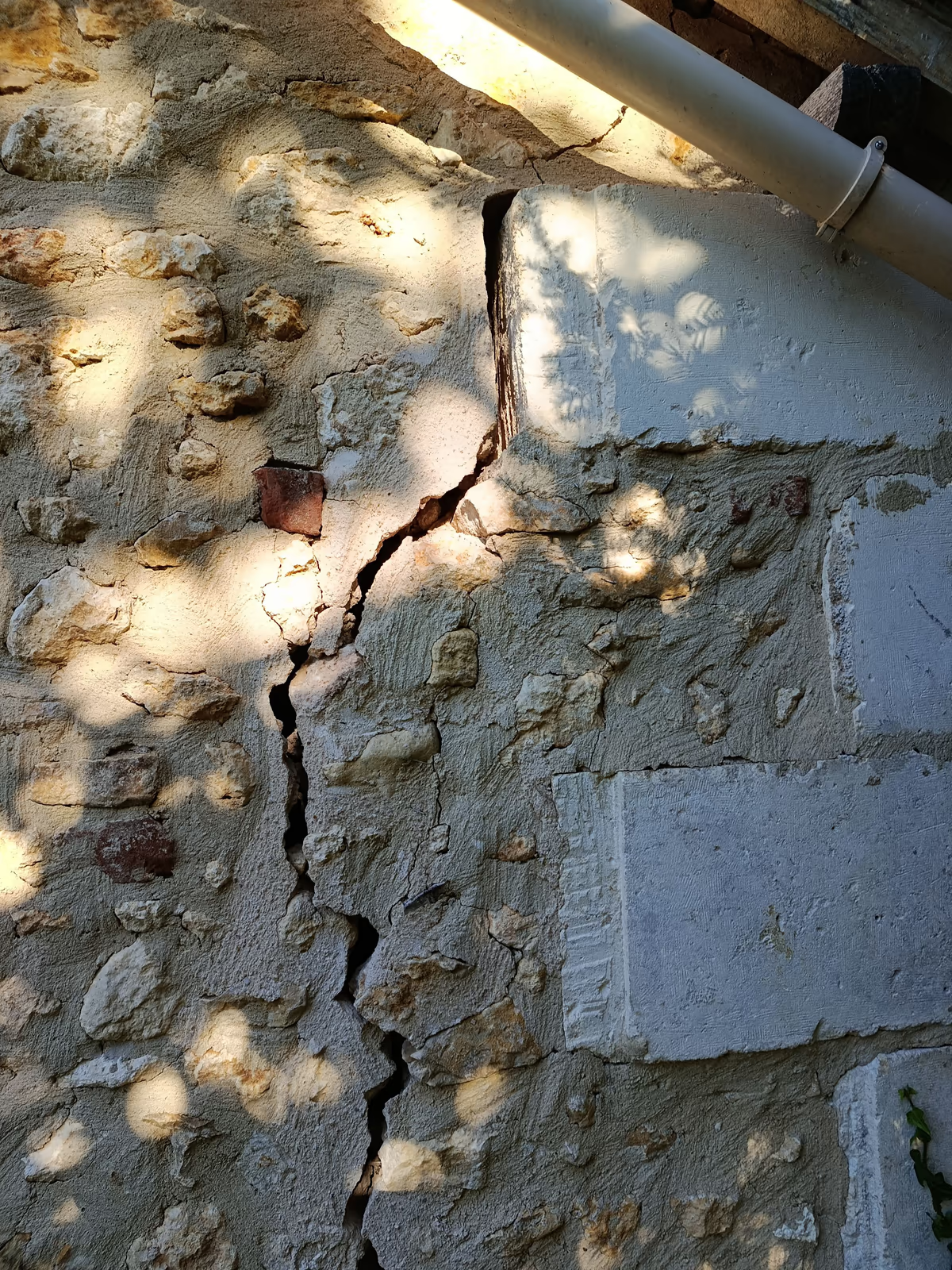
A crack running from the eaves to the base of the wall. 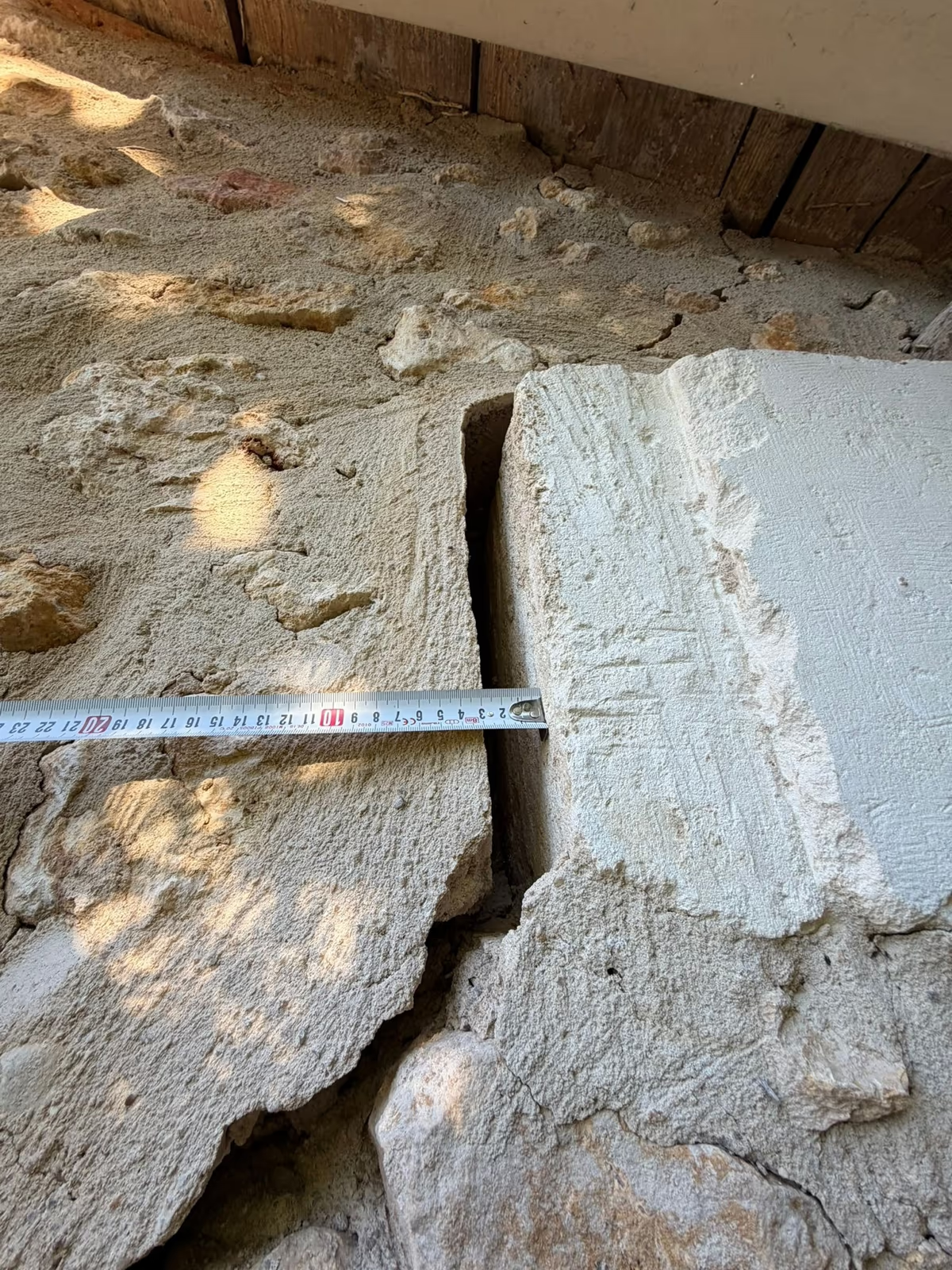
The crack measured, so it can be monitored. 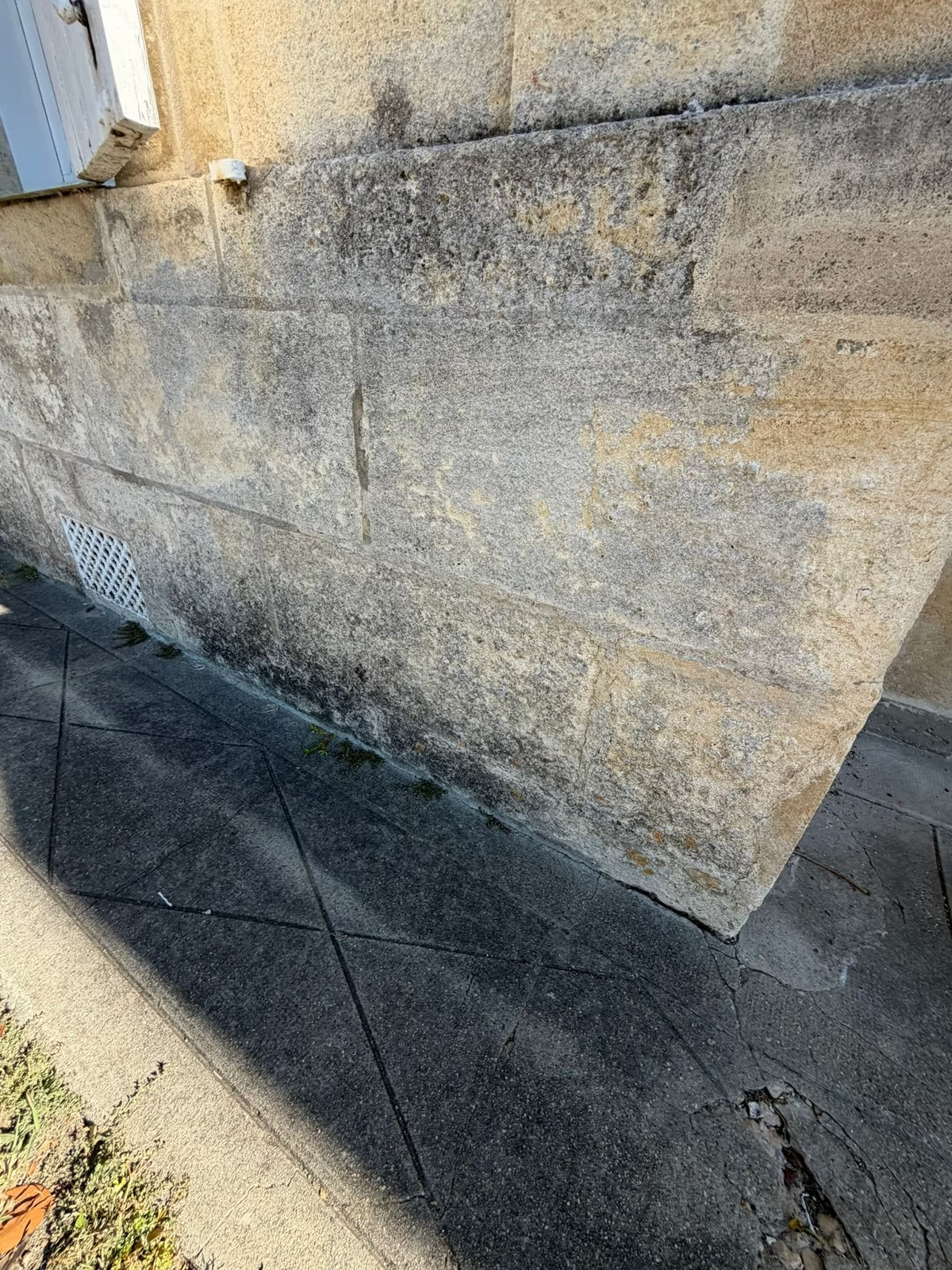
The foot of a wall that no longer dries out.
What you receive
A written report, delivered before you sign, that you can read, understand and share with your notaire, lender or builder.
An illustrated report
Every finding photographed, located and explained in plain words.
Defects ranked
What is urgent, what can wait, what is routine maintenance.
The works to plan
In the right order, so you can build a budget and ask for quotes.
In English
Written in French, then delivered to you in English.
The report helps you choose between three outcomes
- Buy, with a ranked budget for the works.
- Reopen talks with the seller, on the price or on works before completion.
- Walk away: a report that saves you from a bad purchase has done its job.
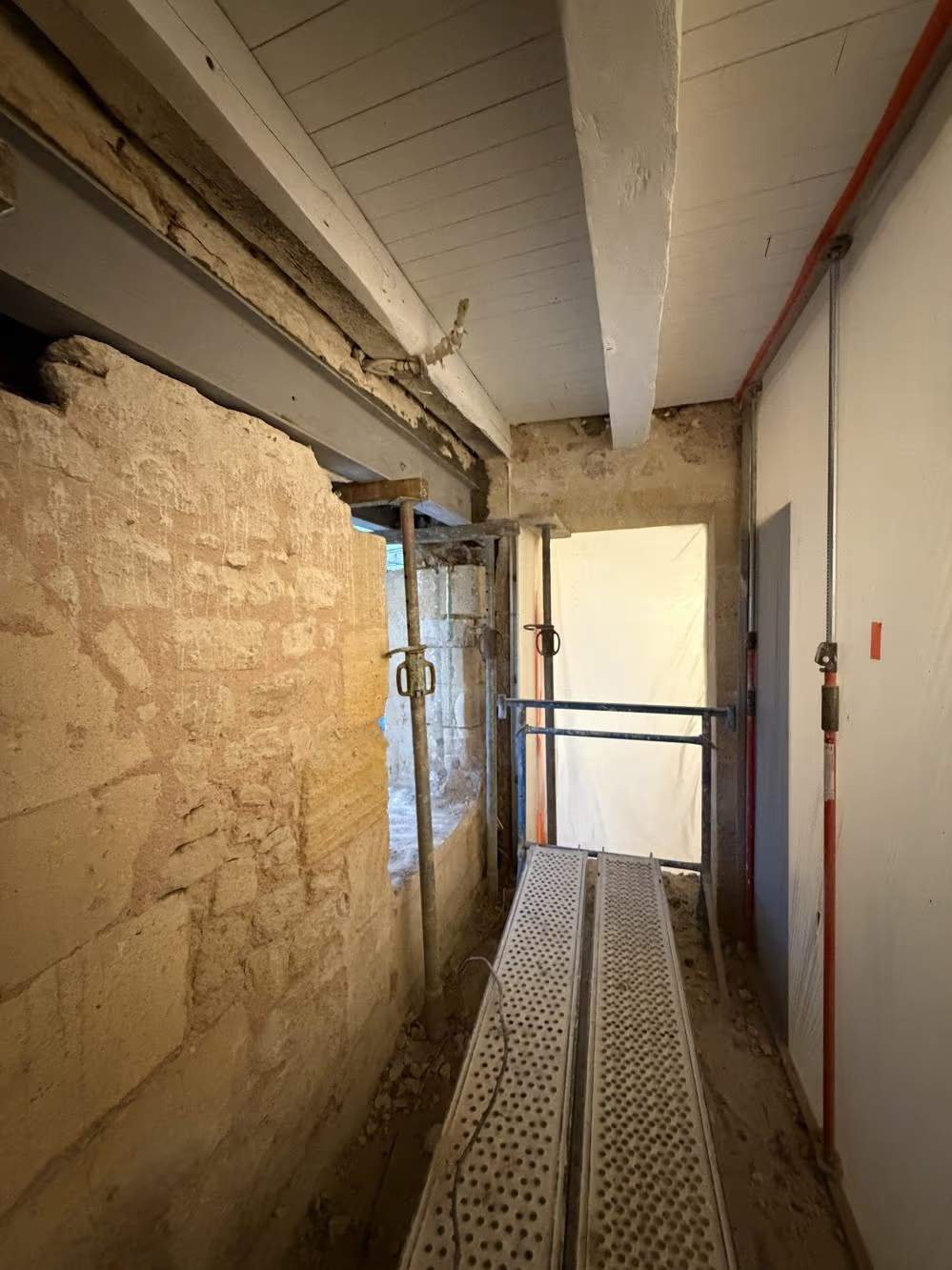
During the works: what a project manager on your side does
In France this role is called AMO (assistance à maîtrise d'ouvrage): an adviser who represents the owner and protects their interests, from the brief to the handover.
What I do
- Define the scope of works and the order to do them in.
- Invite contractors to quote and compare the quotes like for like.
- Check each contractor's insurance certificates.
- Visit the site and send a report after each visit.
- Prepare the handover and follow up the snagging list.
What I do not replace
- The architect, who designs the project and may be required for planning permission.
- The maître d'œuvre, who manages the contractors on site.
- The contractors, who carry out the works and are responsible for them.
While you are abroad
- A report with photos after every site visit.
- A private online project page: budget, schedule, reports.
- Decisions confirmed in writing, nothing gets lost.
What is different in France
A few things that often surprise buyers from abroad.
Contractors' insurance
French builders must hold ten-year liability insurance (garantie décennale), and the certificate must come with their quote. An owner having building work done must take out dommages-ouvrage insurance before work starts.
Planning permission
Changing the outside of a building or adding floor area usually needs a déclaration préalable or a permis de construire, filed at the town hall (mairie). A certificat d'urbanisme tells you which rules apply to the plot.
Protected areas
Near a listed monument, works need the approval of the Architecte des Bâtiments de France. The village of Saint-Émilion is a protected heritage site at the heart of a UNESCO World Heritage area. A château that is itself listed has its own procedures.
The notaire
The notaire is a public official who drafts the deed of sale and holds the deposit until completion. The seller's diagnostic file is attached to the preliminary contract; it does not cover the roof timbers or the structure.
The preliminary contract (compromis)
A private buyer of a home has ten days to withdraw after being notified of the compromis. If you are borrowing, the mortgage condition must run for at least one month; other conditions can be negotiated with the seller, with your notaire's advice.
General information, not legal advice. Your notaire and the local town hall will confirm what applies to your property.
A recent assignment: an early nineteenth-century château
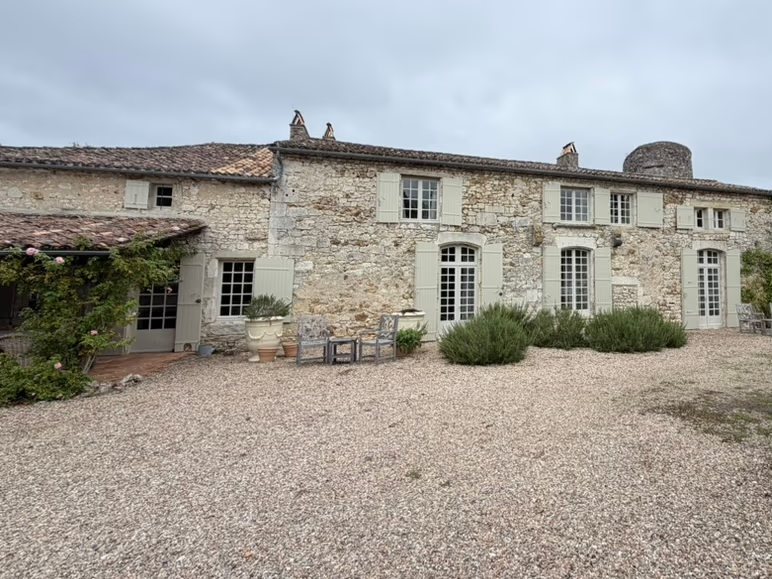
A stone château built around 1800, surveyed as part of its sale. No names and no location: discretion is part of the job.
- The property
- Stone château built around 1800, with its outbuildings
- The context
- A sale
- The assignment
- Structural survey of the main house and the outbuildings
- The report
- Written in French, delivered in English, English text checked with a dedicated translation tool
What a structural survey covers on a building of this age
Load-bearing walls
Rubble stone and dressed stone: cracks, bulging, leaning, condition of the joints.
Floors
Beams and joists, and above all where they bear into the walls, where damp weakens them.
Roof timbers
Joints, sagging, signs of insects or rot.
Outbuildings
Often less well maintained than the house: gable walls, roof timbers, roofs.
The report sets out what is sound, what needs watching and what needs work, so decisions are made on solid ground.
Frequently asked questions
What does a pre-purchase survey cover?
The structure, roof timbers, roofing, damp, cracks and the points specific to old buildings. The report sets out the condition of the property, the risks and the works to expect.
Is it worth having a survey before signing?
Yes, that is the best time: you know the condition of the building before you commit. A survey is still possible during the ten-day cooling-off period after the compromis, but time is short.
Can you oversee the works while I am abroad?
Yes. I visit the site at key stages, send a report with photos after each visit, and decisions are confirmed in writing.
Which language will we use?
We can write to each other in English. Reports are written in French, then translated into English, and the English text is checked using a dedicated translation tool. Phone calls and site meetings are usually in French, so we keep the important points in writing.
Which areas do you cover?
The whole of Gironde, including Saint-Émilion and the Libournais, and the whole of the Dordogne.
How much does it cost?
Every assignment is quoted individually, depending on the property and the stages you need, after a first exchange by email.
Tell me about your project
Send me the property details and your timing. The contact form is in French, but you can write your message in English. I reply within 24 to 48 hours.